
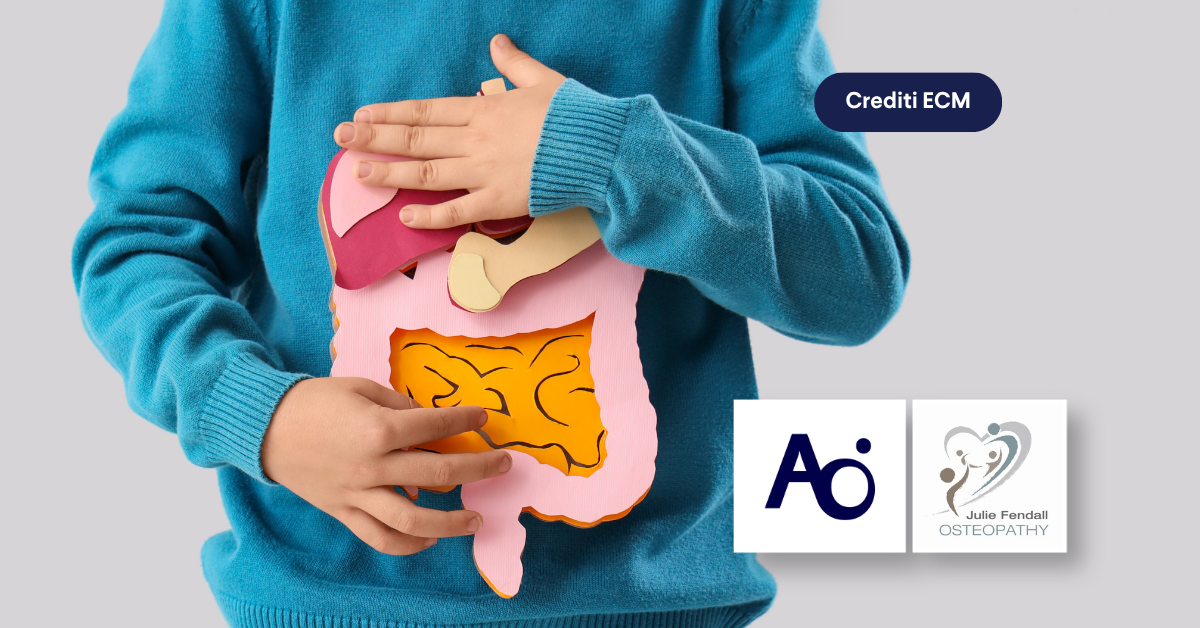
An osteopathic approach to paediatrics: respiratory function and digestion in childhood
Postgraduate Course in Paediatric Osteopathy with Julie Fendall DO MOstSc(Paeds)
Respiratory and gastrointestinal issues are among the most common reasons for consultation in paediatric osteopathic practice. From recurrent respiratory infections to functional digestive disorders, numerous childhood conditions involve closely interconnected systems that influence a child’s wellbeing, growth and ability to adapt.
This postgraduate course explores the development, physiology and main dysfunctions of the respiratory and gastrointestinal systems, offering osteopaths an integrated understanding of the mechanisms that regulate a child’s health and the ways in which the osteopathic approach can support their functional balance.
Through the integration of embryology, development, clinical reasoning and practical observation, participants will acquire useful tools for understanding the relationships between respiratory function, digestion, the nervous system, the immune response and musculoskeletal development.
Understanding respiratory function in child development
Breathing is one of the key processes of adaptation to life outside the womb and continues to evolve throughout childhood.
The course explores the embryological and functional development of the respiratory system, analysing how growth and maturation processes can influence the respiratory health of newborns and children.
Particular attention will be given to:
- Embryological development of the respiratory system
- Respiratory adaptation in the neonatal period
- The development of respiratory function in early childhood
- Clinical observation and respiratory assessment in an osteopathic context
- Assessment of early respiratory dysfunctions
- Clinical reasoning and treatment planning
Common respiratory conditions in paediatric practice
The main respiratory problems observed during childhood will be analysed, with particular attention to their systemic impact and implications for osteopathic assessment:
- Recurrent respiratory infections
- Chronic and acute inflammatory processes
- Upper airway congestion
- Respiratory allergies
- Bronchiolitis
- Laryngitis
- Asthma and bronchial hyperreactivity
The course will also explore how respiratory problems can affect:
- The autonomic nervous system
- Musculoskeletal mechanics
- Connective tissue
- The dynamics of body fluids
- Interstitial fluid
- Cerebrospinal fluid
- The expression of the primary respiratory mechanism
Gastrointestinal function and systemic development
Gastrointestinal health plays a central role in childhood development and in the regulation of numerous physiological systems.
Starting with the embryological development of the digestive system, the course will explore the processes that influence gastrointestinal function from the intrauterine period through to infancy.
The following topics will be covered:
- Prenatal and postnatal development of the digestive system
- Maturation of gastrointestinal function
- Development of the gut microbiome
- Regulation of intestinal motility
- Feeding and digestive adaptation
Common digestive disorders in newborns and children
The most common gastrointestinal problems observed in clinical practice will be explored in depth:
- Gastro-oesophageal reflux
- GERD (gastro-oesophageal reflux disease)
- Abnormalities in intestinal motility
- Constipation
- Diarrhoea
- Abdominal distension and bloating
- Food allergies
- Food intolerances
Particular attention will be paid to distinguishing between normal physiology, developmental variability and conditions requiring further medical investigation.
The link between the gut, the immune system and respiration
One of the most innovative aspects of the course concerns the analysis of the connections between the digestive system, the immune system, respiratory function and neurological regulation.
Participants will explore:
- The role of the microbiome in immune development
- The relationships between the gut and the nervous system
- The influence of digestive function on respiratory health
- The interactions between systemic inflammation and tissue adaptation
- The role of connective tissue in communication between systems
This perspective allows for a broader understanding of paediatric clinical presentations and promotes truly integrated osteopathic reasoning.
Skills developed
By the end of the course, participants will be able to:
- Understand the development of the respiratory and gastrointestinal systems
- Carry out an osteopathic assessment focused on respiratory and digestive issues
- Recognise the main paediatric clinical presentations of osteopathic interest
- Interpret the relationships between respiratory, digestive, neurological and immune function
- Apply a systemic and integrated approach to clinical reasoning
- Identifying red flags and appropriate referral criteria
- Communicate effectively with parents and other healthcare professionals
A course guided by Julie Fendall’s clinical experience
The programme is led by Julie Fendall, an osteopath with extensive clinical and teaching experience in paediatric osteopathy.
With many years’ experience in the assessment and treatment of newborns, infants and children, Julie has trained osteopaths in numerous international settings, contributing to the promotion of a paediatric approach based on clinical reasoning, patient safety and interdisciplinary collaboration.
Her direct experience with numerous clinical cases enables her to consistently integrate theory with practical examples, real-life cases and strategies that can be immediately applied in professional practice.
Course location
Teacher

Program
{{ item.lesson.description }}
{{ item.lesson.description_en }}
by · {{ item.lesson.teacher.firstname }} {{ item.lesson.teacher.lastname }} · {{ item.lesson.teacher_2.firstname }} {{ item.lesson.teacher_2.lastname }} · {{ item.lesson.teacher_3.firstname }} {{ item.lesson.teacher_3.lastname }}Target audience
When
Timetable
Language of the course
Info
Support
We are at your disposal to offer you clarification on courses and AOI modalities
Approccio osteopatico alla pediatria: funzione respiratoria e digestione nell'infanzia
Related courses




Sign in
Enter your data to log in
Please note, following the platform upgrade, you will necessarily have to perform a recovery of your password in order to log in. Recover ›
Recover data
Forgotten your password? Don't worry, enter your email to retrieve your credentials.
Sign up
Enter your data to register
Your personal data will be used to support your experience on this website, to manage your account access and for other purposes described in our privacy policy.